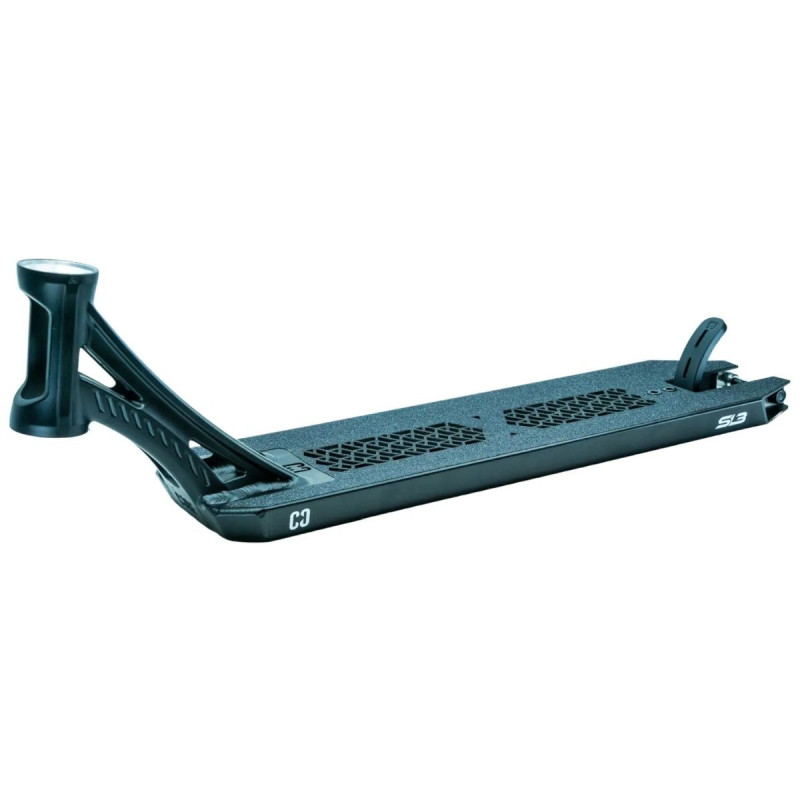
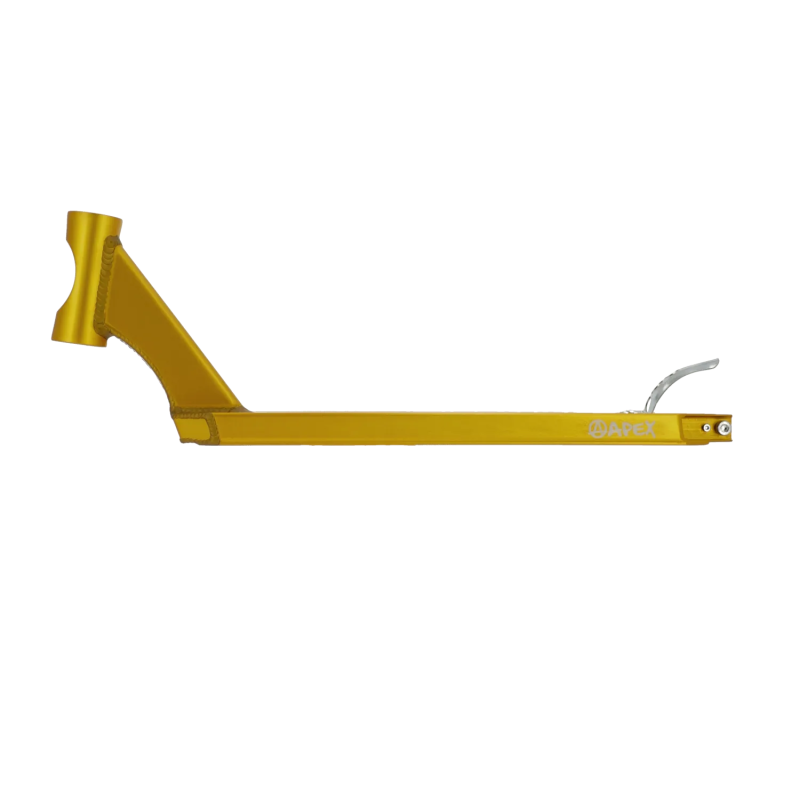
Which deck should you choose for your stunt scooter?
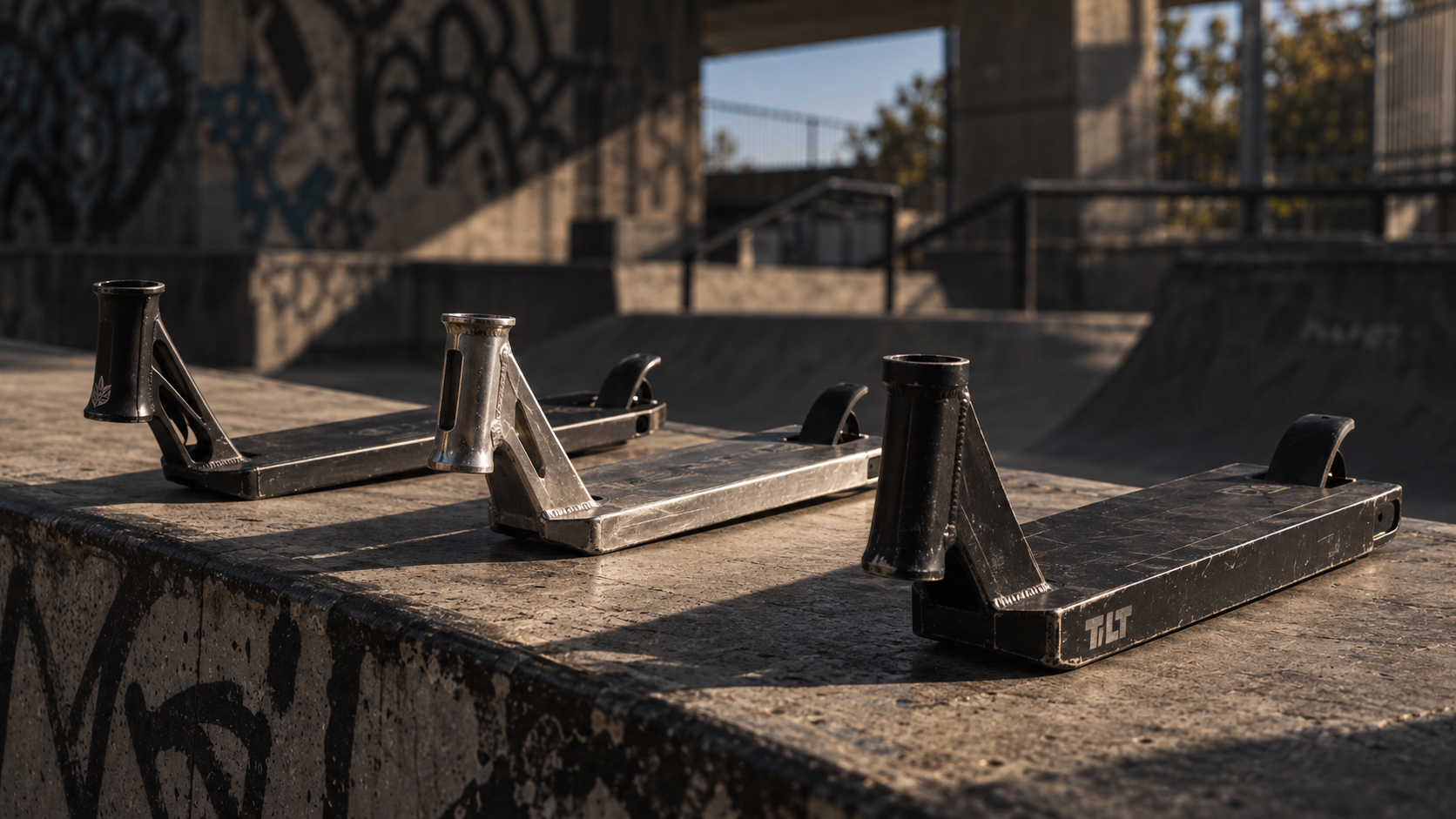
The deck is the base of the entire stunt scooter and one of the parts that shapes its character the most. Swapping the deck can make the scooter lighter and quicker to spin, or the opposite – more stable, bigger, and more comfortable for street riding.
When choosing a new deck, pay attention above all to riding style, width, length, weight, and compatibility with the wheels and fork.
Street, park, or hybrid - which deck should you pick?
This is the best starting point. Decks can be split into three main groups.
PARK deck
Park decks are designed above all for low weight and easy rotation. They're usually narrower and shorter, with a heavily trimmed-down construction.
Choose a park deck if you spend most of your time at the skatepark, ride ramps, and care about tailwhips, barspins, and other technical tricks.
Typical features:
-
smaller width and length,
-
low weight,
-
compact construction,
-
often a peg-cut ending.
STREET deck
Street riding has different priorities. Decks are usually wider, longer, and more solid, giving you plenty of foot space and a larger surface for grinds.
A characteristic feature is the box-cut, a rectangular deck ending that makes it easier to use the sides of the deck while riding ledges and rails.
Choose a street deck if you mostly ride around the city, grind a lot, and value stability and foot space more than minimal scooter weight.
HYBRID deck
Hybrid sits between park and street. This kind of deck is usually bigger than a typical park deck, but lighter and more compact than a full street deck.
It's a good choice for a rider who rides the skatepark one day and the street the next, and doesn't want to build a scooter locked into just one style.
Hybrid also works well when you're still developing your riding style and aren't yet sure whether you'll lean more toward park or street.
How do you choose the right deck width?
Width strongly affects how the scooter handles.
A narrower deck is usually lighter and easier to spin. That's why narrower decks dominate park setups.
A wider deck gives you more foot space, increases stability, and makes grinds easier. That's exactly why wide decks are the standard for street riding.
Put simply:
PARK → narrower
HYBRID → medium width
STREET → wider
Don't treat specific dimensions as a rigid rule, though. A lot depends on height, shoe size, and above all the rider's individual preferences.
How do you choose the right deck length?
The principle is similar.
A shorter deck is more compact and easier to control while spinning. It works well for younger riders and for park riding.
A longer deck gives you more room to position your feet and usually suits taller riders and street riding better.
That's why someone moving from a small complete scooter to their first custom build shouldn't automatically buy the biggest deck available just because it looks professional. A deck that's too big can make riding needlessly harder, exactly the same as one that's too small.
Peg-cut or box-cut?
Peg-cut has a narrowed ending near the rear wheel. It reduces the deck's size and weight, which is why it's often found on park decks.
Box-cut has a full, rectangular ending. It gives you a larger surface for grinds and is mainly characteristic of street decks.
In hybrid designs you can find solutions that sit somewhere between these two approaches.
Is a lighter deck always better?
Not necessarily.
At the park, every gram matters more, since a lighter deck makes fast rotations easier. On the street, larger dimensions and the right geometry can matter more than minimal weight.
So instead of just looking for the lightest deck, look for the deck that suits how you actually ride.
Will a new deck fit my scooter?
You need to check this before buying. Not every deck is compatible with every set of parts.
The most important parameters are:
-
maximum wheel diameter,
-
supported wheel width,
-
axle diameter,
-
compatibility with the fork and wheel,
-
the type of brake or fender used.
If you're moving parts over from your old deck, check the parameters of your current wheels and axle first. The compression system itself, e.g. SCS, HIC, or IHC, doesn't directly depend on the deck.
Which deck should you choose? Quick summary
If you mostly ride park, look for a lightweight, shorter, and narrower deck that's easy to spin.
If street is your main style, go for a wider and longer deck, ideally with a box-cut construction, giving you plenty of foot space and comfort during grinds.
If you combine both styles, choose hybrid – a deck that's a compromise between the low weight of park and the dimensions and stability of street.
What matters most, though, is fitting the deck to you, not to whatever your favorite rider currently uses. A good deck should match your height, scooter size, riding style, and the rest of your setup.